Bansal Overseas

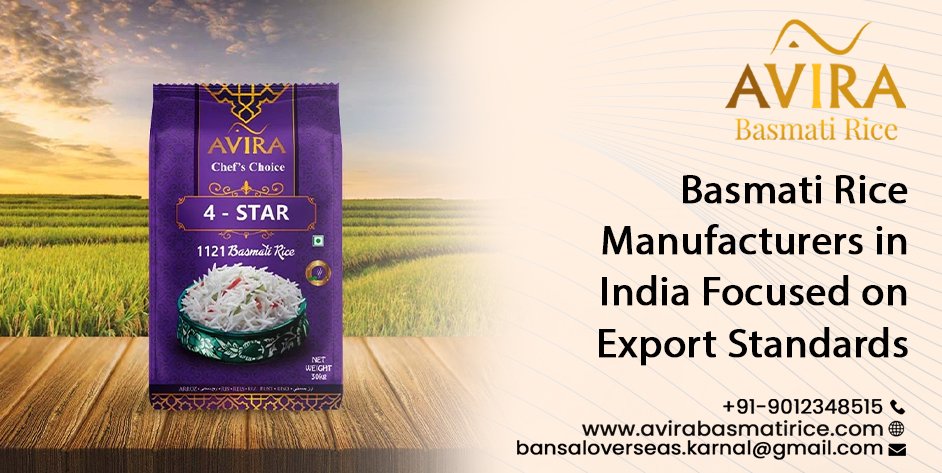
Basmati Rice Manufacturers in India Focused on Export Standards

Basmati rice is not just a commodity but a cultural heritage characterized by its needle like length, fluffy texture and aroma that can fill up the entire home. With the growing need of high quality grains in nations, the Basmati Rice Manufacturers in India have taken a center stage in the transformation of the traditional agriculture to the modern restaurants.


This blog will discuss the way Indian manufactures preserve the purity of this Queen of Fragrance and the particular export criteria that enable Indian Basmati to win the world market.

Role of Basmati Rice Manufacturers in India

Basmati is mostly grown in fertile Indo-Gangetic plains which is the epicenter of Basmati. Nevertheless, the process of transforming a fertile green field into a high quality burlap bag is complicated with industrial accuracy. The Basmati Rice Manufacturers are the final custodians of quality whereby the inherent properties of the grain are maintained with scientific procedures, and its elongation and the nutty taste.

The fundamental Operations of Quality Production.
In order to satisfy the demands of a sophisticated international market, the leading manufacturers pay special attention to the following key phases:
  • Paddy Selection: The manufacturers obtain raw paddy in areas where the soil chemistry is reputed to be the best. It only takes grains which have certain length to breadth ratios
  • Natural Aging: Basmati does not achieve its real nature immediately like normal rice. The Indian Basmati Rice Manufacturers tend to age the rice between 12 to 24 months to reduce moisture content on the rice to make sure that the grains do not stick when cooked.
  • Milling and Polishing: With the help of the latest automated equipment, the husk is eliminated, and the grain is gently polished in order to preserve its integrity.
  • Quality Grading: The electronic color sorters are employed to eliminate the discolored or broken grains so that only the purest, pearly whites of the long grains make it to final package.

Basmati Rice Producers Who Determine the Standard of Export

When we move the discussion to the international level, the stakes are much greater. To Basmati Rice Manufacturers in India, Export Quality is not merely a marketing buzzword, it is a set of standards that is strict and determined by international food safety authorities.

1. Compliance with International Certifications
Manufacturers with the export orientation are required to match their facilities with safety standards in the world. This includes:

FSSAI & APEDA: Basic certification that makes sure that the rice is suitable to be consumed and that it has grown in known Basmati growing areas.

2. Grain Length and Moisture Control

None of the export markets tolerate chalky or broken grains. Indian Basmati Rice Manufacturers use high level moisture meters to maintain the grain at constant moisture level of 12-13 percent to avoid spoilage during long sea trips.

3. Sustainable and Traceable Sourcing

The contemporary consumerists of the world require to be informed about the origin of their food. Farm to fork traceability is currently being adopted by leading Basmati Rice Manufacturers in India. Through direct work with farmers and supervision of pesticide use, they are guaranteed of the final product being of high standards of the Maximum Residue Limit (MRL) standards demanded.

Domestic vs Export Quality

To better understand what sets export-focused Basmati Rice Manufacturers apart, let’s look at the technical specifications often required for international shipments:

FeatureStandard Domestic GradePremium Export Grade
Average Grain Length6.61 mm to 7.50 mm8.30 mm+ (for 1121 Sella)
Aging Period6 - 9 Months12 - 24 Months
Broken GrainsUp to 5% - 10%Less than 1% - 2%
Moisture Content13% - 14%Strictly below 12.5%
Aroma IntensityModerateHigh (Naturally Preserved)
Purity/Admixture10% - 15%95% Purity (Max 5% Admixture)

Innovation in Processing: Global Success Secret

This is the reason why Basmati Rice Manufacturers in India is still the preferred choice to international buyers because they are ready to innovate. The conventional Basmati is fragile and the contemporary processing methods such as Steam Processing, Parboiling (Sella) have transformed the market of exporting Basmati.

Steam Basmati: The paddy is steamed so that the nutrients contained in the husk are transferred to the grain making it stronger and more scented when cooking.
Golden Sella: This rice is a popular dish in the Middle East that goes through a special parboiling process that makes the grain a golden color and prevents it from breaking even during cooking in large commercial scale to prepare biryani.

Conclusion

The brand name of Indian Basmati is based on tradition and advancement technology. Bansal Overseas being the top Basmati Rice Manufacturers in India has mastered the flavor of tradition since 1993. They use the latest laboratories and FSSAI approved plants to make sure that all their flagship product, Avira is naturally aged and hygienically processed. This adherence to exportations and quality in each grain enables them to send the rich fields of India to the world and keep a gold standard to clients in all continents.

Frequently Asked Questions 

Ans: Its name means the fragrant one because it contains a natural chemical compound of 2-acetyl-1-pyrroline that is what makes it have the aroma it does.

Ans: Keep it in a cool dry place in an air tight container to avoid its absorbing moisture or kitchen vapours.

Ans: Natural aroma is accrued during cooking and remains. Artificial perfumes tend to be too strong in the bag but fades away after boiled rice.

Ans: A light creamy or off white color normally means that rice is old, and bright white may mean fresh harvest or excessive polishing.

Continue to Chat

Continue to Chat